
Check Canyon County's Current Owner Card
Begin at the Assessor Real Estate Search. Enter a parcel number or property address, open the matching parcel, and read the Ownership line beside the land identifiers that confirm you have the right piece of ground.
| Ownership | Exact current-roll name and entity spelling |
|---|---|
| Mailing address | Destination for tax correspondence |
| Situs address | Physical location of the parcel |
| PIN | Exact parcel identifier used across county systems |
| Short legal description | Lot, block, tract, or rural description clue |
| Last transfer | Date and instrument leading to the newest deed |
Guest cards add value, lot size, and transfer basics. Registered access adds ownership history, value history, taxes due, and building traits. None of that decides ownership. Only recorded documents do.
Read Canyon County Ownership, Situs, and Mail Together
Ownership, situs, and PIN should all point to the same parcel before you trust a result. The mailing address plays a different role. That is where tax notices go. It may belong to a trustee, a post box, an office, or a place far outside Canyon County, and it never tells you who actually occupies the site.
Assessment roll: the Assessor's dated list of property. Owner of record: the name that roll carries. Situs: the physical location of the parcel, while recording lag is the gap before a new deed reaches a later roll update.
Keep the exact ten-character PIN. It bridges records more reliably than a name, since initials, spelling variants, trusts, estates, and LLCs blur name matches.
Note: Only a deeded owner may request a mailing-address change, and Canyon County verifies ownership before applying that request.
Open the Canyon County Current Owner Search
The county's official parcel search supplies the address and PIN entry point.
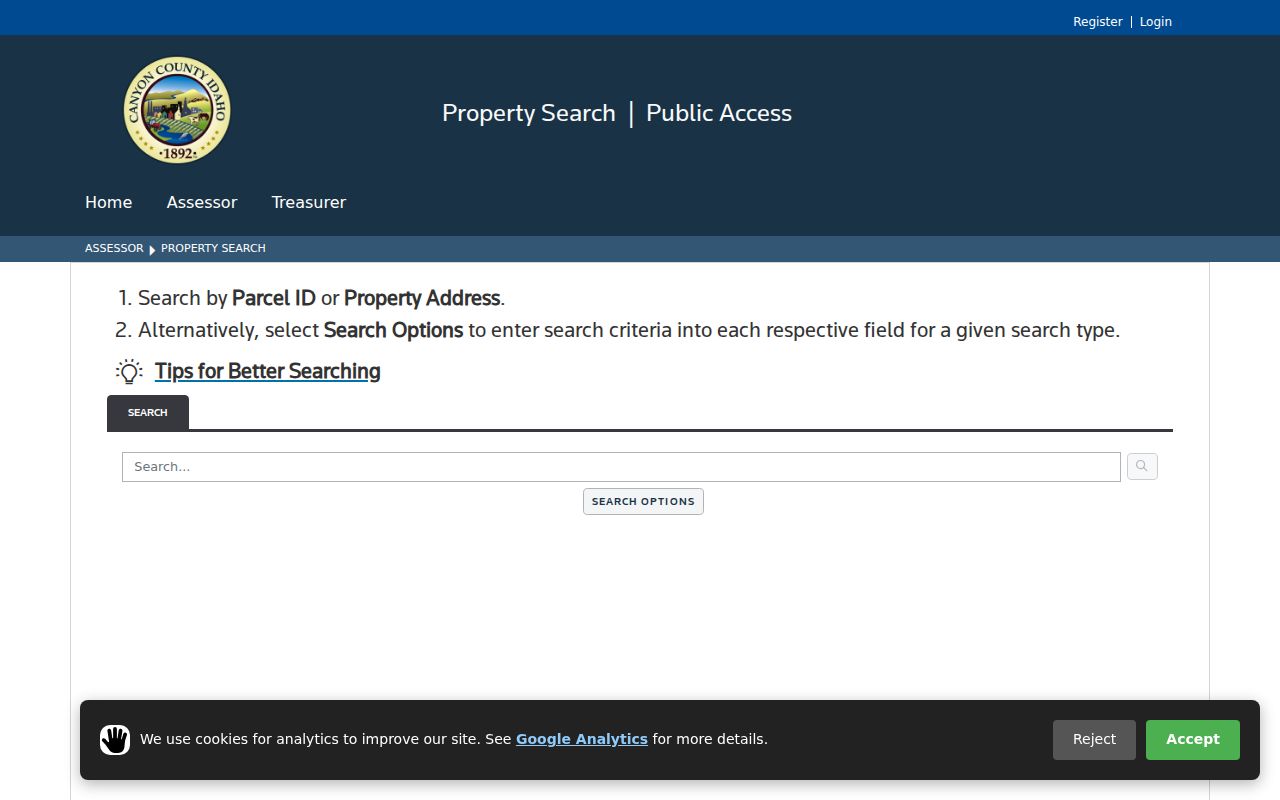
Copy more than the name. When you pick a result, save the Ownership entry together with the PIN, roll year, and transfer reference, because those attached fields make the lookup auditable.
Confirm the Current Canyon County Owner
This workflow checks the present owner without rebuilding the full historical chain:
- Search the situs and open the matching Assessor parcel card.
- Save Ownership, mailing address, PIN, legal description, roll year, and last-transfer instrument.
- Find that instrument and any newer deed in the Recorder index.
- Compare the latest deed's grantee, legal description, and recording time with the card.
- View the image at a public terminal or request a copy if vesting remains unclear.
- Owner of record
- The party named on the assessment roll.
- Grantee
- The party receiving the interest in the newest deed.
- Registered agent
- An entity contact, not automatic proof of property ownership.
Measure How Current Canyon County's Owner Record Is
Canyon County estimates value as of January 1 and begins mailing annual assessment notices in June. The Assessor applies recorded documents to the roll, so a deed can be filed before the Ownership display refreshes. Compare dates rather than assuming both offices update at once.
A free registered view may add ownership history, but that remains assessment data. For a recent sale, the newest recorded deed can be the more current event. Idaho's non-disclosure setting also means a last-transfer reference is not a complete public sale-price history.
Recent-transfer gap. The current owner field can lag a new deed. Check the newest recorded instrument before relying on the roll name.
Verify Canyon County Entity Owners in Present Records
A trust, estate, or LLC may be the owner of record on the roll. Keep the exact spelling. Read the newest deed's vesting language. Names behind the entity tempt guesswork. Do not substitute a trustee, beneficiary, member, or registered agent on inference alone. The Idaho SOSBiz portal can clarify a company's filing identity and agent, yet that record never outranks the parcel card or the deed. If the two records differ, ask the custodian.
Note: Same-name owner results require a PIN and legal-description check before they can be tied to a particular Canyon County parcel.
Follow Canyon County's Last-Transfer Instrument
Transfer date and instrument number lead the way. The Recorder's index covers 1984 to the present. A row there can show parties, subtype, recording time, fee, and verified status. Blank fields are common. Consideration, description, or book and page may sit empty, so treat an empty field as an incomplete row rather than a complete deed result.
Recorded images are not online. View them at public terminals in the Recorder's Caldwell office, or request a copy. The image carries the wording that settles grantee and legal description. The index row is only the locator.
Read the transfer subtype before naming a buyer. A quitclaim, trustee deed, sheriff certificate, quiet-title instrument, or probate filing can change the record without any ordinary sale, so the grantee is not always a purchaser. Follow any related releases or court references. The present-owner task ends with the newest supported vesting result and its date, and tracing earlier grantors belongs to the historical chain.
Use Canyon County Current Owner Data Lawfully
A mailing field can serve as a correspondence route for a legitimate property matter. Republish it only when the task requires. Do not overread the roll. It does not prove occupancy, possession, beneficial interests behind an entity, a legal boundary, or the absence of unrecorded claims.
Lawful use. Canyon County owner data may support due diligence and property questions. Never use it to stalk, harass, intimidate, or harm a person.
Idaho runs an Address Confidentiality Program for eligible participants. It gives them a substitute address and confidential handling. Never use public records to defeat those protections. Where title actually matters, such as a purchase, an estate, an easement, or a dispute, read the deed itself and get qualified help. The wider address-to-owner method sits on the Canyon County owner lookup page.
A web record will not load at times. A transfer can also be too fresh to show in a familiar view. Office visits are the fallback then. Assessor staff work at 111 N. 11th Avenue, Suite 250 in Caldwell, with public computers in Plat Room 230. The Recorder sits in Suite 330 and supplies terminals for viewing recorded images. Bring the PIN, situs, owner spelling, transfer date, and instrument number. That detail lets staff isolate the parcel instead of sorting through a broad name request.
Keep a worksheet for any current-owner search. It should capture the search input, result count, the exact Ownership label, roll year, mailing and situs fields, PIN, value year, a short legal description, lot size, and the last-transfer reference. Add the newest deed's grantee, recording time, and full legal description. Label any missing item as unavailable. This record beats a bare owner name and makes a later refresh easy to compare.
Check the Canyon County Roll Date Before Calling an Owner Current
The Assessor fixes values on January 1. The office then builds the annual roll. The Recorder, by contrast, accepts instruments all year. That split creates a predictable gap after any sale. Write down the roll year and the date you accessed the portal. Note the last-transfer instrument number if the Ownership field shows one. Use it to pull the newest deed index entry. A later filing may carry the same legal description. That may explain why the owner display has not caught up.
The transfer subtype matters too. A quitclaim, trustee deed, executor deed, sheriff certificate, tax deed, or corrective instrument needs more context. A plain warranty deed speaks for itself more plainly. Read the grantee, the granting clause, vesting language, and the legal description. Also read the acknowledgments and references to prior instruments. Only then draw conclusions about Canyon County property records. A name sitting in an index row does not mean that person holds title.
Resolve Current Canyon Ownership Mismatches
When the Assessor and the newest deed disagree, confirm both records describe the same parcel. Compare PIN, situs, lot and block, subdivision name, township, range, section, acreage. Compare any parent or child parcel references too. Canyon County growth creates new lots. It also retires old PINs before every public screen presents the history the same way.
A mailing-address correction goes through the Assessor's procedure, not the deed index. For a deed error or an indexing question, keep the instrument number handy. Then contact the Recorder. A title dispute needs qualified legal help. The point of a current-owner check is a dated, reproducible comparison of official fields. It is not a guess about who occupies the property.